
Tooth-friendliness
Allulose: the tooth-friendly sugar
Tooth-friendly sweetness with allulose
Oral health is essential for well-being. Beyond dental care, a tooth-friendly diet is necessary. Foods high in sugar – especially sweets – should not be consumed too often: oral bacteria break down sugar into acids that attack enamel and promote caries. Allulose is tooth-friendly because, unlike sucrose, it is not metabolised by these bacteria to produce acid. Importantly, its sensory properties – sweetness profile and intensity – are very similar to ordinary sugar, without an unpleasant aftertaste.
h4>“Food” for caries bacteria
Plaque bacteria feed on readily digestible carbohydrates, mainly sucrose, and ferment them into acids that lower oral pH; the more acidic the environment, the greater the enamel damage. Saliva helps remineralise enamel and buffer pH, but frequent sugar intake means repeated acid attacks and insufficient repair time, tipping the balance towards demineralisation and enabling bacteria to advance caries.
Why is allulose tooth-friendly?
Oral microorganisms lack the enzymes necessary to efficiently ferment allulose, resulting in fewer harmful acids being formed. Tooth-friendliness is assessed by cariogenicity and erosivity. Carbohydrates that lower plaque pH below 5.7 within 30 minutes after consumption are considered highly cariogenic; in addition, direct acid effects on enamel are examined. To qualify as “tooth-friendly”, acidity must remain below 40 µmol/l [H+] over 30 minutes.
At the University of Zurich, allulose was thoroughly tested; it proved to be neither cariogenic nor erosive and can therefore be regarded as “tooth-friendly.” In healthy volunteers, plaque pH remained above the critical 5.7 level after allulose consumption, both during and after intake (see Figure 1). Allulose itself lies in the neutral pH range and is therefore non-erosive – a palatable, tooth-friendly alternative to sucrose and other sugars.
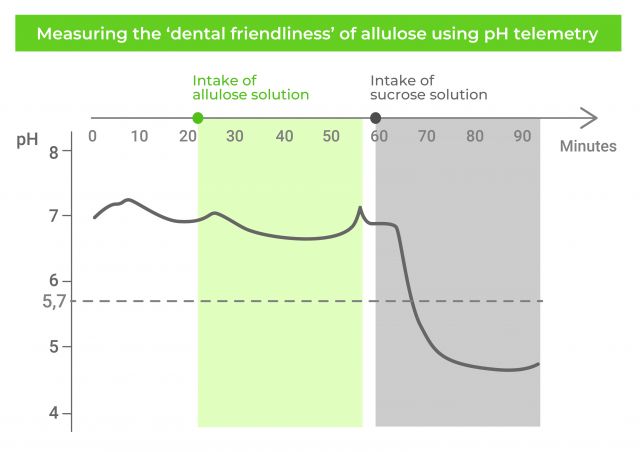
Figure 1: Plaque pH after allulose vs sucrose; after allulose, pH remains above 5.7